
 Image 1 of 1
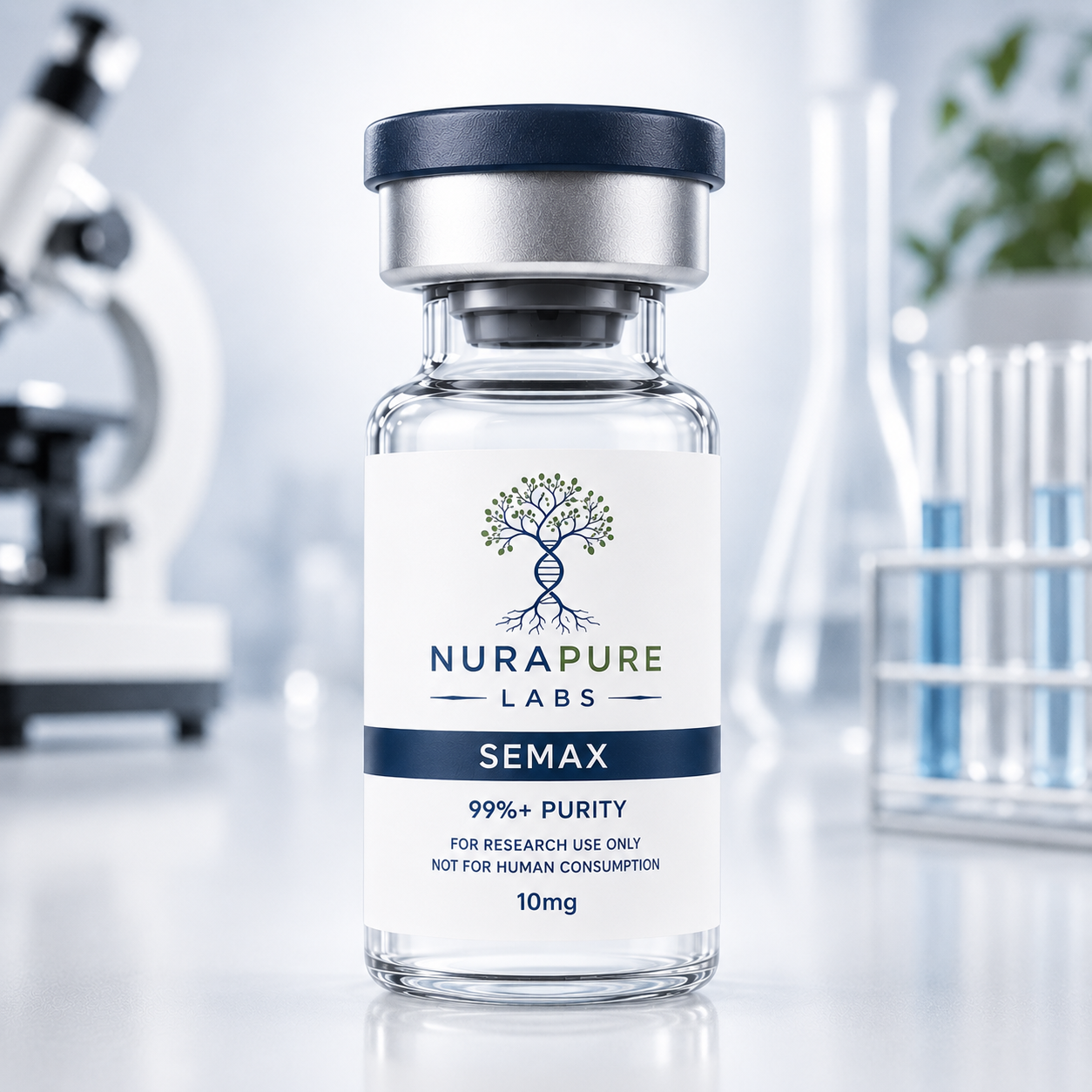
Semax is a synthetic peptide derived from a fragment of adrenocorticotropic hormone (ACTH), originally developed in Russia and studied for its effects on the central nervous system. It lacks the hormonal activity of ACTH itself and is instead studied for neurological and cognitive effects.
Proposed mechanisms of action:
Increases expression of brain-derived neurotrophic factor (BDNF), which supports neuron growth and survival
Modulates dopamine and serotonin turnover in the central nervous system
Influences cholinergic system activity, associated with attention and memory
Exhibits antioxidant and neuroprotective properties in models of cerebral ischemia
Studied for effects on cerebral blood flow
Research applications include:
Cognitive function and memory studies
Neuroprotection and ischemic stroke recovery models
Attention and focus-related research (including ADHD-adjacent models)
Neurodegenerative disease research
Stress and neuroendocrine response studies
Molecular characteristics:
7-amino acid synthetic peptide (Met-Glu-His-Phe-Pro-Gly-Pro)
Structurally related to ACTH(4-10) fragment, with additional stabilizing amino acids
Approved as a prescription drug in Russia and some CIS countries (marketed under names like Semax) for conditions including stroke recovery and cognitive impairment — not approved by the FDA or EMA
Commonly studied via intranasal administration routes in research settings
Typically supplied as a lyophilized powder for reconstitution
Important: This product is intended strictly for in-vitro laboratory research use only. It is not for human or animal consumption, and is not a drug, food, or cosmetic in this context. Not evaluated for safety, efficacy, or purity for clinical use in your jurisdiction. Handle only in a controlled research environment by qualified personnel.
Semax is a synthetic peptide derived from a fragment of adrenocorticotropic hormone (ACTH), originally developed in Russia and studied for its effects on the central nervous system. It lacks the hormonal activity of ACTH itself and is instead studied for neurological and cognitive effects.
Proposed mechanisms of action:
Increases expression of brain-derived neurotrophic factor (BDNF), which supports neuron growth and survival
Modulates dopamine and serotonin turnover in the central nervous system
Influences cholinergic system activity, associated with attention and memory
Exhibits antioxidant and neuroprotective properties in models of cerebral ischemia
Studied for effects on cerebral blood flow
Research applications include:
Cognitive function and memory studies
Neuroprotection and ischemic stroke recovery models
Attention and focus-related research (including ADHD-adjacent models)
Neurodegenerative disease research
Stress and neuroendocrine response studies
Molecular characteristics:
7-amino acid synthetic peptide (Met-Glu-His-Phe-Pro-Gly-Pro)
Structurally related to ACTH(4-10) fragment, with additional stabilizing amino acids
Approved as a prescription drug in Russia and some CIS countries (marketed under names like Semax) for conditions including stroke recovery and cognitive impairment — not approved by the FDA or EMA
Commonly studied via intranasal administration routes in research settings
Typically supplied as a lyophilized powder for reconstitution
Important: This product is intended strictly for in-vitro laboratory research use only. It is not for human or animal consumption, and is not a drug, food, or cosmetic in this context. Not evaluated for safety, efficacy, or purity for clinical use in your jurisdiction. Handle only in a controlled research environment by qualified personnel.