
 Image 1 of 1
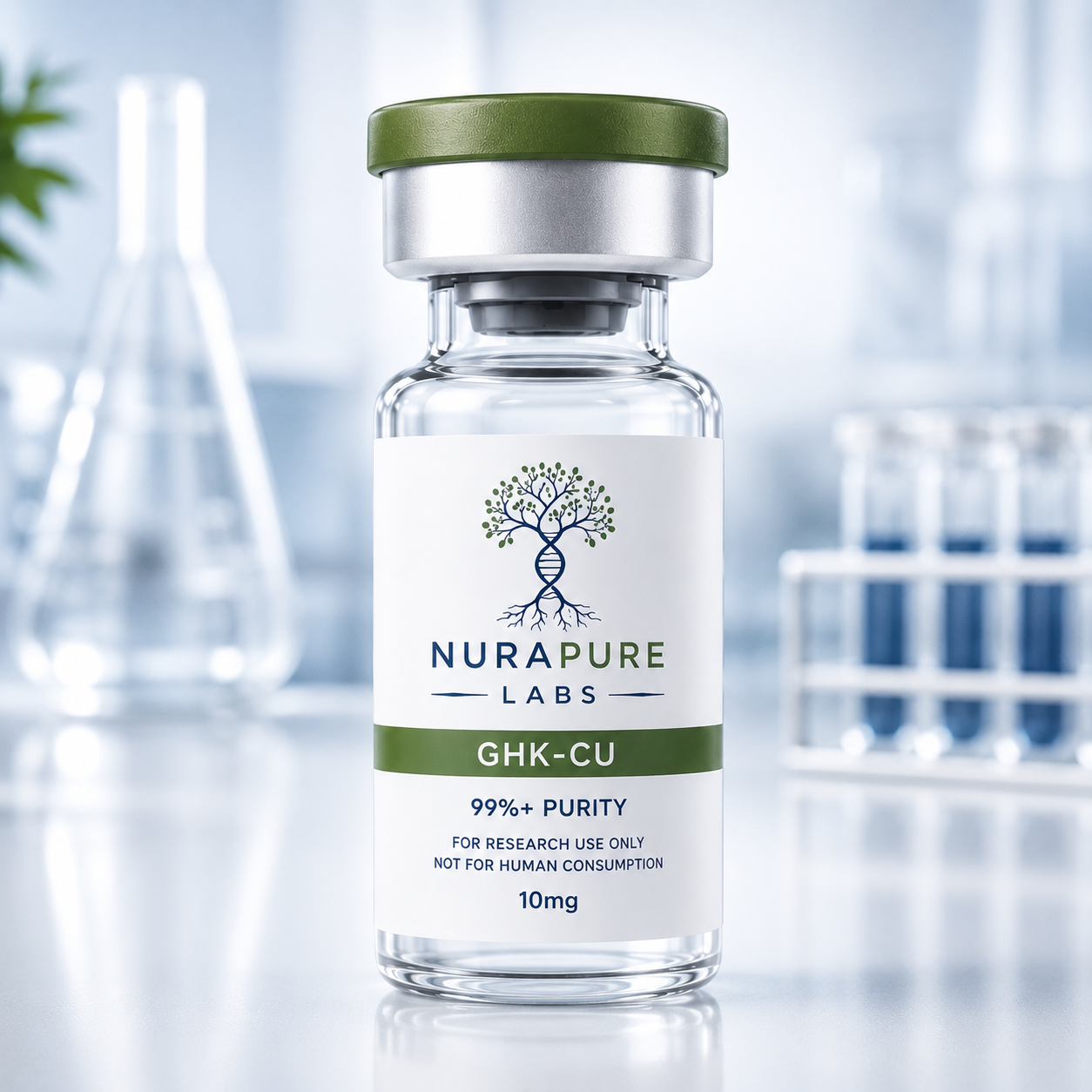
GHK-Cu is a naturally occurring copper complex of the tripeptide glycyl-L-histidyl-L-lysine (GHK). First identified in human plasma, it is found naturally in the body but declines significantly with age. GHK-Cu is widely studied for its role in tissue remodeling, wound healing, and antioxidant activity.
Proposed mechanisms of action:
Stimulates collagen and elastin synthesis via fibroblast activity
Modulates expression of genes involved in tissue repair
Exhibits antioxidant and anti-inflammatory properties
Acts as a chemoattractant for immune cells involved in wound healing
Supports angiogenesis (formation of new blood vessels)
Research applications include:
Skin regeneration and anti-aging studies
Wound healing and tissue repair models
Hair follicle and dermal papilla research
Antioxidant and anti-inflammatory pathway studies
Studies on copper's role in extracellular matrix remodeling
Molecular characteristics:
Naturally occurring copper-binding peptide
Small molecular weight, water-soluble
Commonly used topically in cosmetic formulations, and studied via injectable routes in research settings
Highly stable due to copper-chelation structure
Important: This product is intended strictly for in-vitro laboratory research use only. It is not for human or animal consumption, and is not a drug, food, or cosmetic when sold in this form. Not evaluated for safety, efficacy, or purity for clinical use. Handle only in a controlled research environment by qualified personnel.
GHK-Cu is a naturally occurring copper complex of the tripeptide glycyl-L-histidyl-L-lysine (GHK). First identified in human plasma, it is found naturally in the body but declines significantly with age. GHK-Cu is widely studied for its role in tissue remodeling, wound healing, and antioxidant activity.
Proposed mechanisms of action:
Stimulates collagen and elastin synthesis via fibroblast activity
Modulates expression of genes involved in tissue repair
Exhibits antioxidant and anti-inflammatory properties
Acts as a chemoattractant for immune cells involved in wound healing
Supports angiogenesis (formation of new blood vessels)
Research applications include:
Skin regeneration and anti-aging studies
Wound healing and tissue repair models
Hair follicle and dermal papilla research
Antioxidant and anti-inflammatory pathway studies
Studies on copper's role in extracellular matrix remodeling
Molecular characteristics:
Naturally occurring copper-binding peptide
Small molecular weight, water-soluble
Commonly used topically in cosmetic formulations, and studied via injectable routes in research settings
Highly stable due to copper-chelation structure
Important: This product is intended strictly for in-vitro laboratory research use only. It is not for human or animal consumption, and is not a drug, food, or cosmetic when sold in this form. Not evaluated for safety, efficacy, or purity for clinical use. Handle only in a controlled research environment by qualified personnel.