
 Image 1 of 1
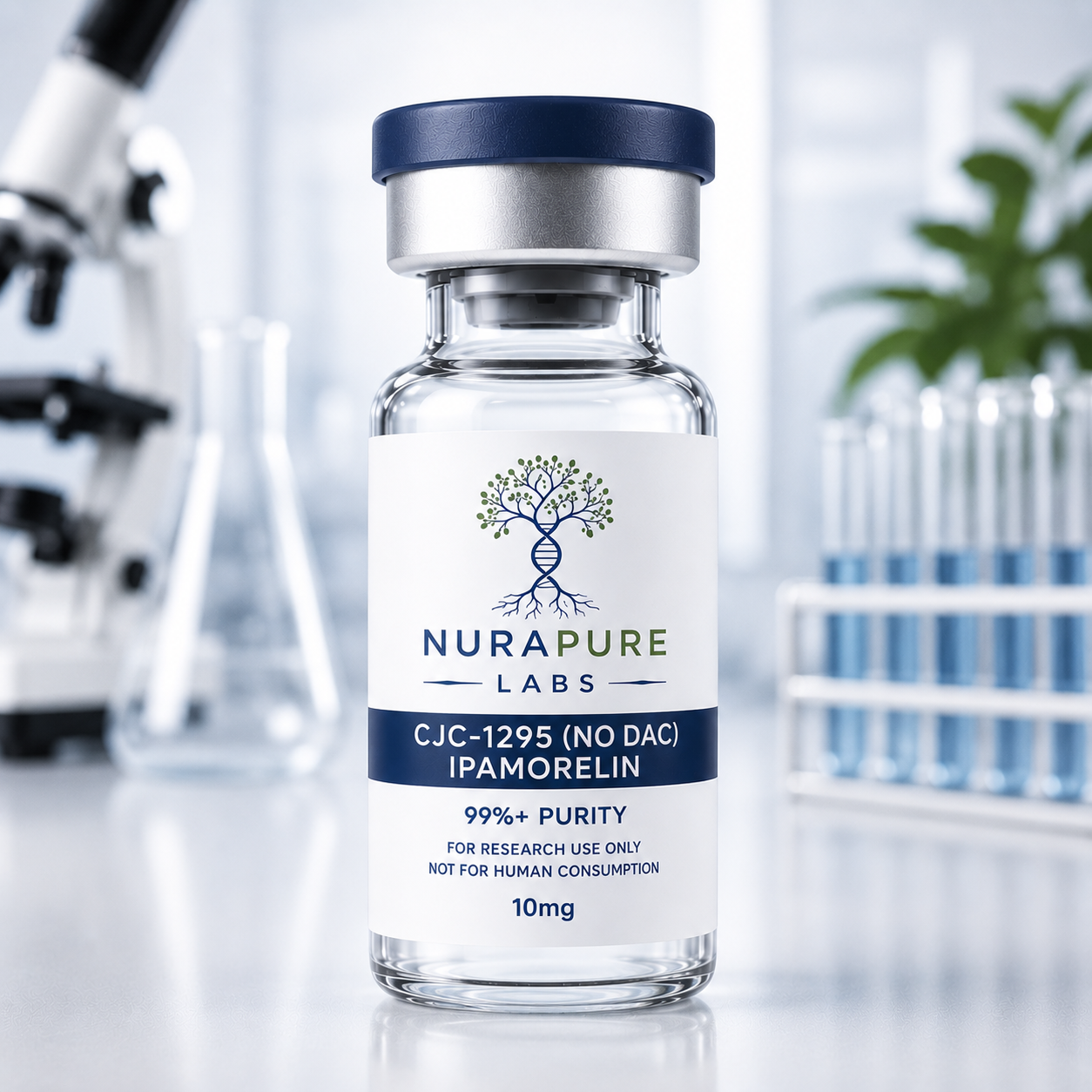
CJC-1295 (No DAC) / Ipamorelin
CJC-1295 (No DAC) and Ipamorelin are two peptides frequently studied together for their complementary effects on growth hormone (GH) secretion. This pairing is one of the most commonly referenced combinations in growth hormone secretagogue research.
CJC-1295 (No DAC):
A modified analog of growth hormone-releasing hormone (GHRH)
"No DAC" refers to the version without Drug Affinity Complex, giving it a short half-life (as opposed to the long-acting DAC version)
Stimulates the pituitary gland to synthesize and release growth hormone
Studied for its role in producing a natural, pulsatile GH release pattern
Ipamorelin:
A selective growth hormone secretagogue and ghrelin receptor agonist
Stimulates GH release via a mechanism distinct from GHRH analogs
Considered highly selective, with research suggesting minimal impact on cortisol, prolactin, or acetylcholine compared to older secretagogues (e.g., GHRP-6)
Rationale for combination:
CJC-1295 (No DAC) and Ipamorelin act on two different receptor pathways involved in GH release (GHRH receptor and ghrelin receptor, respectively). Research suggests combining GHRH analogs with ghrelin mimetics may produce a synergistic, more pronounced GH pulse than either compound studied alone.
Research applications include:
Growth hormone axis and pituitary function studies
Body composition, lean mass, and lipolysis research
Sleep quality and GH-related recovery studies
Aging and GH decline research models
Molecular characteristics:
CJC-1295 (No DAC): 29-amino acid peptide, short half-life (approx. 30 minutes)
Ipamorelin: 5-amino acid peptide, pentapeptide structure
Both typically supplied as lyophilized powders for reconstitution, often co-blended in a single vial for research convenience
Important: These products are intended strictly for in-vitro laboratory research use only. They are not for human or animal consumption, and are not drugs, foods, or cosmetics. Not evaluated for safety, efficacy, or purity for clinical use. Handle only in a controlled research environment by qualified personnel.
CJC-1295 (No DAC) / Ipamorelin
CJC-1295 (No DAC) and Ipamorelin are two peptides frequently studied together for their complementary effects on growth hormone (GH) secretion. This pairing is one of the most commonly referenced combinations in growth hormone secretagogue research.
CJC-1295 (No DAC):
A modified analog of growth hormone-releasing hormone (GHRH)
"No DAC" refers to the version without Drug Affinity Complex, giving it a short half-life (as opposed to the long-acting DAC version)
Stimulates the pituitary gland to synthesize and release growth hormone
Studied for its role in producing a natural, pulsatile GH release pattern
Ipamorelin:
A selective growth hormone secretagogue and ghrelin receptor agonist
Stimulates GH release via a mechanism distinct from GHRH analogs
Considered highly selective, with research suggesting minimal impact on cortisol, prolactin, or acetylcholine compared to older secretagogues (e.g., GHRP-6)
Rationale for combination:
CJC-1295 (No DAC) and Ipamorelin act on two different receptor pathways involved in GH release (GHRH receptor and ghrelin receptor, respectively). Research suggests combining GHRH analogs with ghrelin mimetics may produce a synergistic, more pronounced GH pulse than either compound studied alone.
Research applications include:
Growth hormone axis and pituitary function studies
Body composition, lean mass, and lipolysis research
Sleep quality and GH-related recovery studies
Aging and GH decline research models
Molecular characteristics:
CJC-1295 (No DAC): 29-amino acid peptide, short half-life (approx. 30 minutes)
Ipamorelin: 5-amino acid peptide, pentapeptide structure
Both typically supplied as lyophilized powders for reconstitution, often co-blended in a single vial for research convenience
Important: These products are intended strictly for in-vitro laboratory research use only. They are not for human or animal consumption, and are not drugs, foods, or cosmetics. Not evaluated for safety, efficacy, or purity for clinical use. Handle only in a controlled research environment by qualified personnel.