
 Image 1 of 1
BPC-157 (Body Protection Compound-157)
BPC-157 is a synthetic peptide derived from a partial sequence of a protective protein found in human gastric juice. It is one of the most widely studied peptides in the context of tissue repair and has become a common reference point in soft-tissue healing research.
Proposed mechanisms of action:
Promotes angiogenesis (formation of new blood vessels) to support tissue repair
Upregulates growth factor receptors involved in healing (e.g., VEGFR2)
Modulates nitric oxide production
Supports fibroblast migration and collagen organization in tendon/ligament models
Studied for gut-brain axis and gastrointestinal lining protection
Research applications include:
Tendon, ligament, and muscle injury models
Gastrointestinal ulcer and gut lining repair studies
Wound healing and post-surgical recovery research
Neuroprotection and gut-brain axis studies
Molecular characteristics:
15-amino acid partial peptide sequence
Stable across a wide pH range
Typically supplied as a lyophilized powder for reconstitution
TB-500 (Thymosin Beta-4 fragment)
TB-500 is a synthetic version of a naturally occurring fragment of Thymosin Beta-4, a protein present in nearly all human and animal cells. It is studied primarily for its role in cell migration, actin regulation, and tissue regeneration.
Proposed mechanisms of action:
Regulates actin (a key structural protein) to promote cell migration to injury sites
Supports formation of new blood vessels and reduces inflammation
Promotes migration of stem cells to damaged tissue
Studied for effects on muscle, tendon, and cardiac tissue repair
Research applications include:
Muscle and tendon injury recovery models
Cardiac tissue repair studies (post-ischemia models)
Wound healing and scar tissue formation research
Hair follicle and flexibility-related studies
Molecular characteristics:
43-amino acid peptide fragment
Naturally occurring in wound fluid
Typically supplied as a lyophilized powder for reconstitution
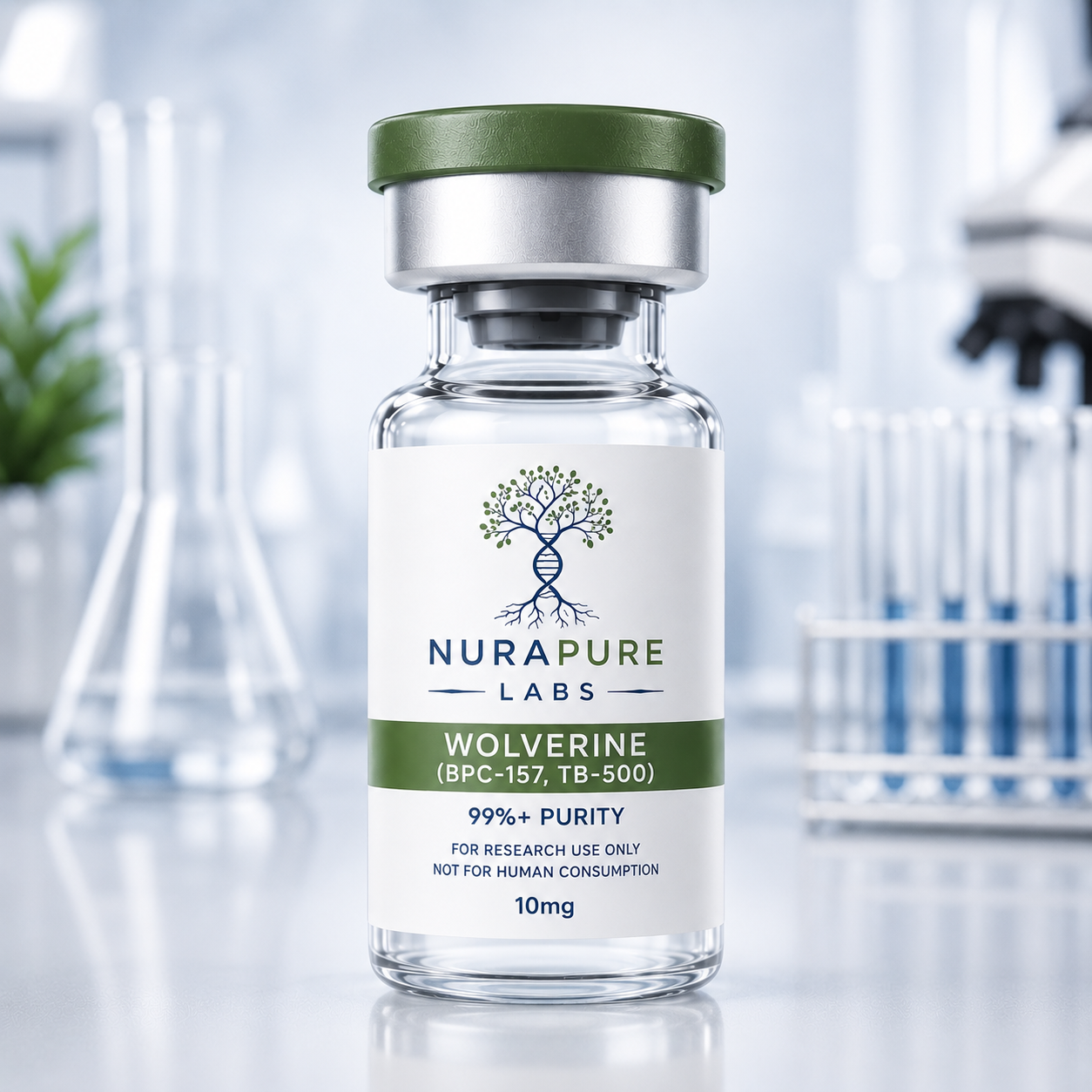
Note on "Wolverine Stack": This is an informal name used in research/enthusiast communities for a combination of BPC-157 and TB-500, based on the premise that pairing a compound associated with localized tissue repair (BPC-157) with one associated with systemic cell migration and regeneration (TB-500) may have complementary effects in injury-recovery research models. There is no clinical or regulatory basis for this naming — it's not an official product designation.
Important: These products are intended strictly for in-vitro laboratory research use only. They are not for human or animal consumption, and are not drugs, foods, or cosmetics. Not evaluated for safety, efficacy, or purity for clinical use. Handle only in a controlled research environment by qualified personnel.
BPC-157 (Body Protection Compound-157)
BPC-157 is a synthetic peptide derived from a partial sequence of a protective protein found in human gastric juice. It is one of the most widely studied peptides in the context of tissue repair and has become a common reference point in soft-tissue healing research.
Proposed mechanisms of action:
Promotes angiogenesis (formation of new blood vessels) to support tissue repair
Upregulates growth factor receptors involved in healing (e.g., VEGFR2)
Modulates nitric oxide production
Supports fibroblast migration and collagen organization in tendon/ligament models
Studied for gut-brain axis and gastrointestinal lining protection
Research applications include:
Tendon, ligament, and muscle injury models
Gastrointestinal ulcer and gut lining repair studies
Wound healing and post-surgical recovery research
Neuroprotection and gut-brain axis studies
Molecular characteristics:
15-amino acid partial peptide sequence
Stable across a wide pH range
Typically supplied as a lyophilized powder for reconstitution
TB-500 (Thymosin Beta-4 fragment)
TB-500 is a synthetic version of a naturally occurring fragment of Thymosin Beta-4, a protein present in nearly all human and animal cells. It is studied primarily for its role in cell migration, actin regulation, and tissue regeneration.
Proposed mechanisms of action:
Regulates actin (a key structural protein) to promote cell migration to injury sites
Supports formation of new blood vessels and reduces inflammation
Promotes migration of stem cells to damaged tissue
Studied for effects on muscle, tendon, and cardiac tissue repair
Research applications include:
Muscle and tendon injury recovery models
Cardiac tissue repair studies (post-ischemia models)
Wound healing and scar tissue formation research
Hair follicle and flexibility-related studies
Molecular characteristics:
43-amino acid peptide fragment
Naturally occurring in wound fluid
Typically supplied as a lyophilized powder for reconstitution
Note on "Wolverine Stack": This is an informal name used in research/enthusiast communities for a combination of BPC-157 and TB-500, based on the premise that pairing a compound associated with localized tissue repair (BPC-157) with one associated with systemic cell migration and regeneration (TB-500) may have complementary effects in injury-recovery research models. There is no clinical or regulatory basis for this naming — it's not an official product designation.
Important: These products are intended strictly for in-vitro laboratory research use only. They are not for human or animal consumption, and are not drugs, foods, or cosmetics. Not evaluated for safety, efficacy, or purity for clinical use. Handle only in a controlled research environment by qualified personnel.